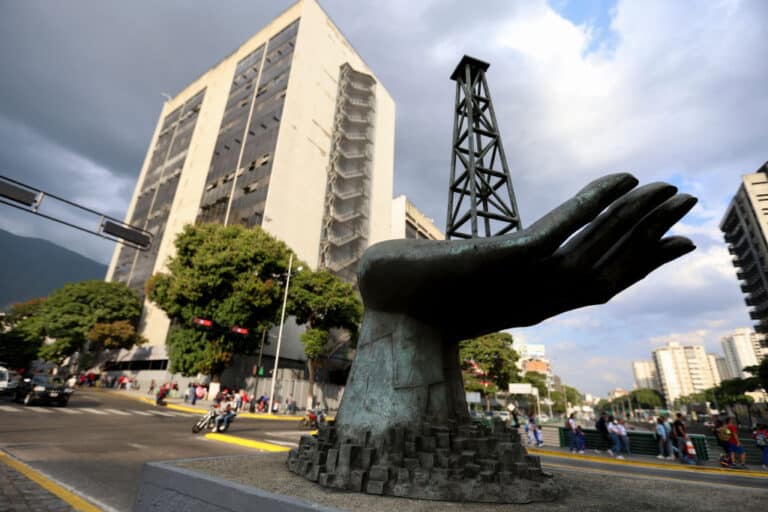
On with Kara Swisher: Venezuela After Maduro, Can Trump Control Caracas From Afar?
The arrest of Venezuelan President Nicolas Maduro, on Saturday, sent shockwaves across the globe. And although the targeted military operation was a success, th
Current Access Level “I” – ID Only: CUID holders, alumni, and approved guests only
Explore our expert insights and analysis in leading energy and climate news stories.
The arrest of Venezuelan President Nicolas Maduro, on Saturday, sent shockwaves across the globe. And although the targeted military operation was a success, th
Get the latest as our experts share their insights on global energy policy.
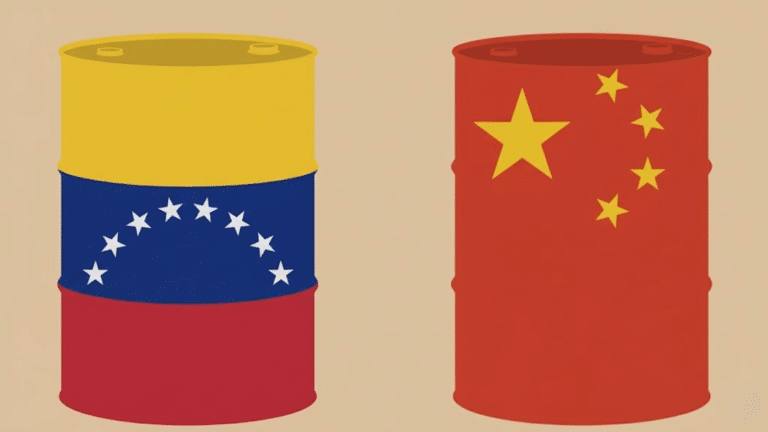
The US intervention in Venezuela may jeopardize both the flow of discounted Venezuelan oil to China's teapot refineries and the role of Chinese oil companies in Venezuela’s upstream business.
Hear in-depth conversations with the world’s top energy and climate leaders from government, business, academia, and civil society.
Early on January 3, 2026, the United States apprehended Venezuelan President Nicolás Maduro and his wife and removed Maduro from power. Maduro was transported to New York, where he now faces federal charges of narco-terrorism and drug trafficking.
Find out more about our upcoming and past events.
The Center on Global Energy Policy at Columbia University SIPA's Women in Energy initiative and Accenture invite you to join us for an evening of conversation and networking...

The Center on Global Energy Policy (CGEP) at Columbia University’s School of International and Public Affairs (SIPA) announced Colin Fenton today as a Fellow. Fenton’s work will focus on global energy markets.
Since 2010, Fenton supervised commodities research at J.P. Morgan Chase & Co., where he was also the firm’s chief commodities strategist, until stepping down recently. Earlier in his career, Fenton was a managing partner at Curium Capital Advisors, a managing director at Duquesne Capital Management, the Chief Intelligence Officer of Ospraie Management, and a member of the Commodities Research Group at Goldman, Sachs & Co. Fenton holds a Masters of Science in Foreign Service from Georgetown University’s Edmund A. Walsh School of Foreign Service. He also is a graduate of Princeton University, where he studied history.
“This is another sign of the Center’s commitment to advancing research with real-world insight for our most complex energy market questions,” said Jason Bordoff, director of the Center on Global Energy Policy. “Colin has unparalleled experience at the intersection of energy and financial markets and is one of the most insightful people I know in the field. We look forward to having him apply that extensive knowledge and wisdom to his research here.”
The Fellows Program brings prominent energy thought leaders to the Center on Global Energy Policy to research and write, teach, and otherwise contribute to Columbia University’s robust and deep intellectual community focused on energy issues.
The arrest of Venezuelan President Nicolas Maduro, on Saturday, sent shockwaves across the globe. And although the targeted military operation was a success, th
U.S. firms may be wary after years of socialism and mismanagement. - Alex Demas - Start a free trial today for full access.
The US intervention in Venezuela may jeopardize both the flow of discounted Venezuelan oil to China's teapot refineries and the role of Chinese oil companies in Venezuela’s upstream business.
In discussing the dramatic seizure of Venezuelan President Nicolás Maduro and his wife, Cilia Flores, over the weekend, President Donald Trump declared that the United States would now “take back” the country’s oil. Yet he has offered little clarity on what exactly this means.
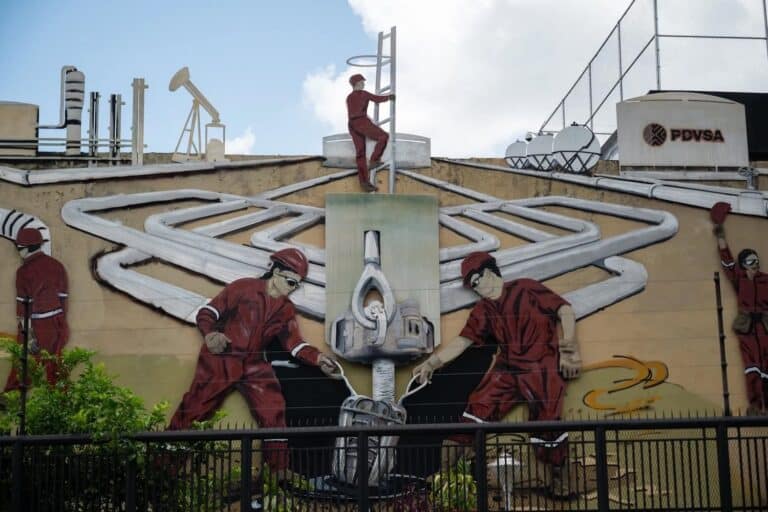
The country could see a relatively rapid recovery of some oil production, depending on the leadership that emerges.