Climate tech can’t scale on corporate generosity alone
Microsoft’s reported pull-back from carbon removal and even 2030 clean energy targets proves that the sector needs policy help.

This website uses cookies as well as similar tools and technologies to understand visitors’ experiences. By continuing to use this website, you consent to Columbia University’s usage of cookies and similar technologies, in accordance with the Columbia University Website Cookie Notice.
Our work is committed to independent and nonpartisan research that meets the high standards of academic integrity and quality at Columbia University.
Our initiatives and programs are designed to address critical needs in key focus areas around energy and climate policy.
Explore our expert insights and analysis in leading energy and climate news stories.
Microsoft’s reported pull-back from carbon removal and even 2030 clean energy targets proves that the sector needs policy help.
Get the latest as our experts share their insights on global energy policy.
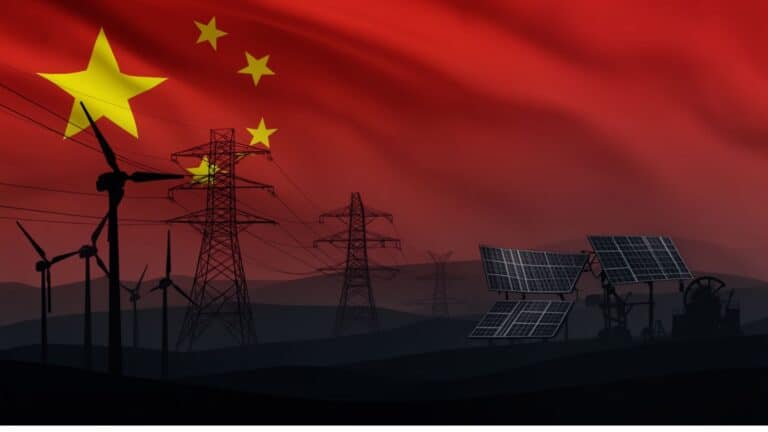
Two economic planning documents released at the March meeting of China's National People’s Congress include the term "energy powerhouse" for the first time.
Hear in-depth conversations with the world’s top energy and climate leaders from government, business, academia, and civil society.
In moments of geopolitical crisis, energy is never just a backdrop. It's often at the center of the story. Today, as conflict involving Iran sends shockwaves through global...
Find out more about our upcoming and past events.
We are the premier hub and policy institution for global energy thought leadership. Energy impacts every element of our lives, and our trusted fact-based research informs the decisions that affect all of us.
Kathryn Longobardi is a former Research Associate at the Center for Global Energy Policy, with a focus on reducing the risk and impact of climate change through decarbonization, climate modeling, carbon dioxide recycling and removal, and evolving technologies to assess climate policy and global markets.
Kathryn has worked on applications of machine learning and artificial intelligence to satellite data, and methods of leveraging geospatial technology to analyze climate change, at NASA Goddard. Her research is focused on change detection algorithms in electro-optical imagery, polarimetric signatures, and the use of computational modeling to simulate the thermodynamics of climate change.
Kathryn holds degrees in Engineering and Physics, and was a NSF grant recipient at the Columbia School of Engineering. She has been a teaching assistant and research associate in the Applied Mathematics and Physics departments at the Naval Postgraduate School, and holds a certificate in Joint Humanitarian Operations from USAID Foreign Disaster Assistance.
Kathryn has taught environmental science on the Atlantic and Pacific Oceans, and is a graduate of Yale University and Columbia School of Engineering.
Get the latest news and research on energy & climate policy.
"(required)" indicates required fields