Did Carbon Actually Score A Quiet Win In Congress?
When Congress approved the Fiscal Year 2026 spending bills last month, many in the carbon sector braced for cuts but reality appears more optimistic.
Current Access Level “I” – ID Only: CUID holders, alumni, and approved guests only
Get the latest as our experts share their insights on global energy policy.
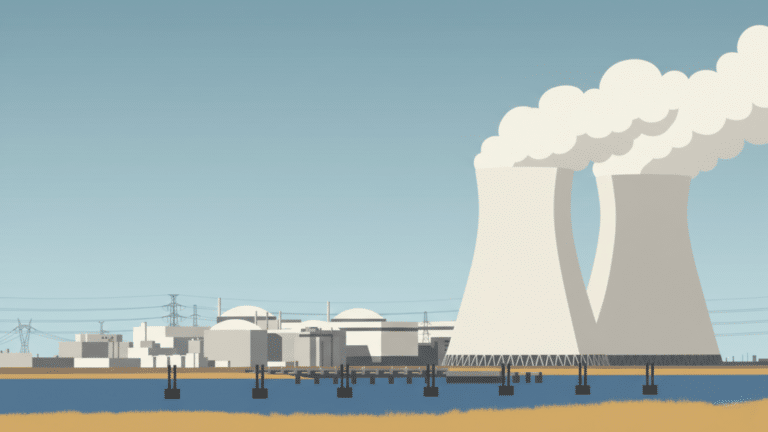
The United States is at a rare inflection point for nuclear energy, with unprecedented momentum behind deployment and regulatory reform as nuclear becomes central to energy security, AI competitiveness, and state and corporate climate goals.
Hear in-depth conversations with the world’s top energy and climate leaders from government, business, academia, and civil society.
With electricity prices on the rise, the future of our power grid is attracting a lot more attention. Surging demand is at the center of the story, but...

Find out more about our upcoming and past events.
This workshop will be conducted in two parts: Part one on February 16 from 1:00 PM to 2:00 PM EST, and Part two on February 18 from 1:00 PM to...

A new report from Democrats on the House Select Committee on the Climate Crisis calls for comprehensive actions by the U.S. Congress to reduce greenhouse gas emissions in the U.S. as quickly as possible, make communities more resilient to climate change, and build a durable and equitable clean energy economy.
Called “Solving the Climate Crisis: The Congressional Action Plan for a Clean Energy Economy and a Healthy, Resilient and Just America,” the 550-page report contains hundreds of recommendations. Some call it the most far-reaching report on climate change to ever appear on Capitol Hill.
In this edition of Columbia Energy Exchange, host Bill Loveless reached the chair of the House Select Committee on the Climate Crisis, Rep. Kathy Castor, a Florida Democrat, soon after the report was released by House Speaker Nancy Pelosi and Rep. Castor. It was the second appearance on Columbia Energy Exchange by Rep. Castor, who first sat down with Bill last fall when the committee was still gathering material for the report.
Among the report’s specific goals are 100% net zero greenhouse gas emissions by 2050 and net negative emissions in the second half of the century. The report would also require a clean energy standard for the electric power sector; a standard to ensure that all light duty vehicles sold by 2035 are zero emission; and similar emission requirements for all new commercial and residential construction by 2030.
It comes after a year of hearings, meetings, research and other actions by the panel to come up with a comprehensive climate strategy. Originally due to be released earlier this year, the report was postponed because of the pandemic.
In their latest discussion, Bill and Rep. Castor talk about the report’s recommendations and the outlook for action on it in Washington at a time when the U.S. is struggling with a pandemic, protests over racial inequality and an economic downturn, not to mention a national election in the fall.
With electricity prices on the rise, the future of our power grid is attracting a lot more attention. Surging demand is at the center of the story, but...
From the affordability crisis and the data center boom, to the US government’s campaign to reinvigorate the Venezuelan oil market, energy is dominating headlines in unusual ways. And...

Great power competition—particularly between the United States and China—is intensifying. This rivalry is reshaping everything from technology supply chains and energy security to the future of artificial intelligence. ...

Early on January 3, 2026, the United States apprehended Venezuelan President Nicolás Maduro and his wife and removed Maduro from power. Maduro was transported to New York, where he now faces federal charges of narco-terrorism and drug trafficking.

The United States is at a rare inflection point for nuclear energy, with unprecedented momentum behind deployment and regulatory reform as nuclear becomes central to energy security, AI competitiveness, and state and corporate climate goals.
Multiple US–Iran conflict scenarios carry materially different risks for global oil infrastructure, transit routes, and prices.

China’s crude oil imports hit a record-high 11.6 million barrels per day in 2025, as geopolitical tensions, low oil prices, and global oversupply spurred China to increase its oil stockpiles, a trend likely to continue in 2026.