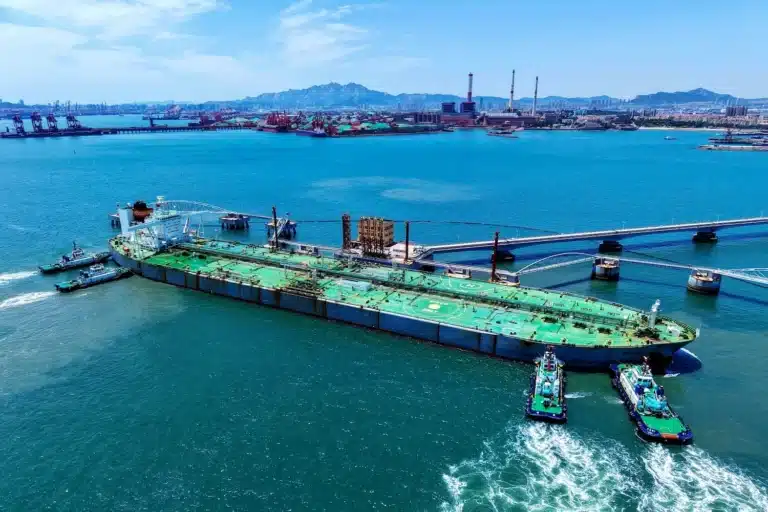
How This Historic Oil Disruption Could Reshape the Global Energy Markets
Iran, Strait of Hormuz, oil prices, solar energy, wind power, energy transition, China, renewables, global markets, energy security
Current Access Level “I” – ID Only: CUID holders, alumni, and approved guests only
Get the latest as our experts share their insights on global energy policy.
On February 28, the US and Israel launched new attacks on Iran targeting primarily the country's leadership, security forces, and missile program.

Hear in-depth conversations with the world’s top energy and climate leaders from government, business, academia, and civil society.
The climate policy landscape in the US is in flux. Last month, the Environmental Protection Agency repealed its own power to regulate greenhouse gases. Two weeks later, the...

Find out more about our upcoming and past events.
This roundtable is open only to currently enrolled Columbia University students. To register, you must sign in with your UNI. The Center on Global Energy Policy (CGEP) at...

The list of controversial energy issues in Washington is a long one. But none may be as complicated to understand and difficult to resolve as the Renewable Fuel Standard (RFS), a U.S. mandate that gasoline and diesel fuel contain specified amounts of ethanol and other biofuels.
In this edition of Columbia Energy Exchange, host Bill Loveless sits down with Dr. Jim Stock to discuss this complex policy and its future. Jim is the Harold Hitchings Burbank Professor of Political Economy at Harvard University, a former chair of the Harvard Economics Department and a non-resident fellow at the Center on Global Energy Policy. Jim also served on the White House Council of Economic Advisers from 2013 to 2014, where his portfolio included the RFS.
Bill and Jim spoke just days after a May 8 meeting at the White House where President Trump, senators from Iowa, Texas and Pennsylvania, and the heads of the Environmental Protection Agency and the Department of Agriculture reached a tentative deal that would resolve a longstanding dispute between oil refiners and the biofuels industry, especially producers of corn-based ethanol. But the devil’s in the details, as Jim says on the podcast. And as Bill and Jim met, the Trump administration had not yet explained how it would follow up on the meeting.
***
For related reading, we invite you to check out Jim’s recent paper, “Reforming the Renewable Fuel Standard”, published in February 2018 with the Center on Global Energy Policy.
The climate policy landscape in the US is in flux. Last month, the Environmental Protection Agency repealed its own power to regulate greenhouse gases. Two weeks later, the...
As the US-Israeli military campaign against Iran enters its third week, the complexities of the global energy landscape are deepening by the hour. Shut-ins of Middle Eastern upstream...

In energy markets, all eyes are on the Strait of Hormuz. As of March 11, 2026, this vital passage is effectively closed to tanker traffic, stranding almost a...

Since the US-Israeli bombing campaign began in Iran, energy markets around the world have been on edge as the conflict threatens immediate and long-term energy supplies. We’ve seen...

On February 28, the US and Israel launched new attacks on Iran targeting primarily the country's leadership, security forces, and missile program.
On February 24, 2026, CGEP hosted a private virtual roundtable under the Chatham House rule to discuss the importance of an independent nuclear safety regulator.


Amid global oil and gas disruptions, China stands prepared for the electrostate era.