Could a strategic lithium reserve kickstart US supply chain development?
NEW YORK -- A strategic lithium reserve is being mooted as a solution to stabilize volatile prices that have hindered American mining projects, allowi
Current Access Level “I” – ID Only: CUID holders, alumni, and approved guests only
This website uses cookies as well as similar tools and technologies to understand visitors’ experiences. By continuing to use this website, you consent to Columbia University’s usage of cookies and similar technologies, in accordance with the Columbia University Website Cookie Notice.
Our work is committed to independent and nonpartisan research that meets the high standards of academic integrity and quality at Columbia University.
Our initiatives and programs are designed to address critical needs in key focus areas around energy and climate policy.
Explore our expert insights and analysis in leading energy and climate news stories.
NEW YORK -- A strategic lithium reserve is being mooted as a solution to stabilize volatile prices that have hindered American mining projects, allowi
Get the latest as our experts share their insights on global energy policy.
This Energy Explained post represents the research and views of the author(s). It does not necessarily represent the views of the Center on Global Energy Policy. The piece...
Hear in-depth conversations with the world’s top energy and climate leaders from government, business, academia, and civil society.
Over the past week, President Trump has intensified pressure on Venezuelan president Nicolás Maduro by targeting the regime’s economic lifeline—oil. The United States has seized two oil tankers...

Find out more about our upcoming and past events.
On January 1, 2026, the European Union's highly-anticipated Carbon Border Adjustment Mechanism (CBAM) will take effect. Introduced in 2023, CBAM will require the importers of certain carbon-intensive goods...
We are the premier hub and policy institution for global energy thought leadership. Energy impacts every element of our lives, and our trusted fact-based research informs the decisions that affect all of us.
Lenfest-Earth Institute Professor of Natural Resource Economics , Vice Dean for Academic Affairs, School of International and Public Affairs
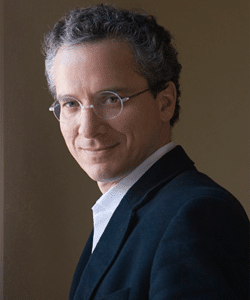
Scott Barrett is a leading scholar on transnational and global challenges, ranging from climate change to disease eradication. His research focuses on how institutions like norms, customary law, resolutions, and treaties can be used to promote international cooperation.
He has advised a number of international organizations, including the United Nations, the World Bank, the OECD, the European Commission, and the International Task Force on Global Public Goods. He was previously a lead author of the Intergovernmental Panel on Climate Change and a member of the Academic Panel to the Department of Environment in the UK.
Barrett previously taught at the Johns Hopkins University School of Advanced International Studies in Washington, DC, where he also directed the International Policy program. Before that, he was on the faculty of the London Business School. He has also been a visiting scholar at Yale. Barrett is a research fellow with the Beijer Institute (Stockholm), CESifo (Munich), and the Kiel Institute of World Economics.
He received his Ph.D. in economics from the London School of Economics; an M.A. in economics from the University of British Columbia, Vancouver; and a B.S., summa cum laude, in resource economics from the University of Massachusetts, Amherst.
Following the historic Paris Agreement last weekend, the Columbia SIPA Center on Global Energy Policy collected commentary on the agreement from several of our scholars and Faculty Affiliates across Columbia University
Get the latest news and research on energy & climate policy.
"(required)" indicates required fields