Israel-Iran Energy War Disrupts Global LNG Supply for Years
Qatars LNG Facility Damage Forces 3-5 Year Repair, Contract Cancellations Attacks on Ras Laffan disrupt global supply, triggering force majeure on con
Current Access Level “I” – ID Only: CUID holders, alumni, and approved guests only
Get the latest as our experts share their insights on global energy policy.
On February 28, the US and Israel launched new attacks on Iran targeting primarily the country's leadership, security forces, and missile program.
Hear in-depth conversations with the world’s top energy and climate leaders from government, business, academia, and civil society.
As the conflict in the Middle East enters its 20th day, events on the ground have shifted into a critical new phase marked by direct strikes on core...
Find out more about our upcoming and past events.
This roundtable is open only to currently enrolled Columbia University students. To register, you must sign in with your UNI. The Center on Global Energy Policy (CGEP) at...

The energy sector landscape is experiencing profound change, complexity and uncertainty–from the impacts of Covid-19 on the global economy and the prospect of reaching peak oil demand, to a rapidly rising recognition of the urgency of combating climate change and accelerated investments in low-carbon technologies. The United Arab Emirates is at the center of these shifts, both as a major Middle Eastern producer of oil and gas but also as an investor in new emerging technologies and low-carbon energy sources.
In this edition of Columbia Energy Exchange, host Jason Bordoff is joined by Musabbeh Al Kaabi, Chief Executive Officer of the Petroleum & Petrochemicals platform at Mubadala, a sovereign investment firm in Abu Dhabi. Jason and Musabbeh discuss what sectors and regions a company like Mubadala is prioritizing in its investment decisions, particularly in the wake of the Covid-19 pandemic and ambitious regional and corporate carbon policy commitments.
Prior to his current role, Musabbeh was the CEO of Mubadala Petroleum, Mubadala’s exploration and production company, from 2014 to 2017. Musabbeh holds a degree in Geophysical Engineering from Colorado School of Mines and a Master of Science in Petroleum Geoscience from Imperial College, London.
As the conflict in the Middle East enters its 20th day, events on the ground have shifted into a critical new phase marked by direct strikes on core...
The climate policy landscape in the US is in flux. Last month, the Environmental Protection Agency repealed its own power to regulate greenhouse gases. Two weeks later, the...
As the US-Israeli military campaign against Iran enters its third week, the complexities of the global energy landscape are deepening by the hour. Shut-ins of Middle Eastern upstream...
In energy markets, all eyes are on the Strait of Hormuz. As of March 11, 2026, this vital passage is effectively closed to tanker traffic, stranding almost a...
On February 28, the US and Israel launched new attacks on Iran targeting primarily the country's leadership, security forces, and missile program.
The war in Iran is not just another energy shock. It is arriving at a moment when Europe is already under cumulative strain: a war on its eastern border, the lingering aftershocks of the 2022 energy crisis, industrial decline, political fragmentation, fiscal limits, and a widening debate over how much of its own security it must now provide.
Media reports suggest the Trump Administration is considering restrictions on US oil exports. Officials have said such measures are not under discussion, according to media reports, but the...
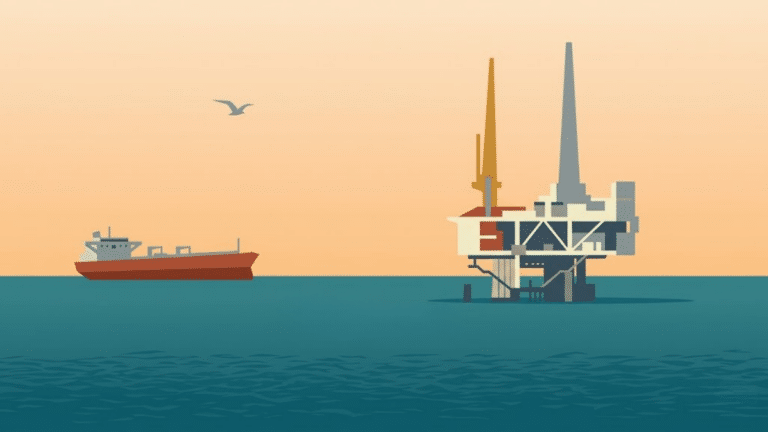
The oil shock triggered by the crisis in the Persian Gulf has pushed crude above $100 per barrel, reviving familiar fears of economic turmoil in the United States driven by surging gasoline and diesel prices.