Coinbase co-founder’s Venezuela oil bet could ripple into crypto
Fred Ehrsam, who was a co-founder of Coinbase and is still a member of the board of Coinbase, has spent long months of his life living in one of the hotels of
Get the latest as our experts share their insights on global energy policy.
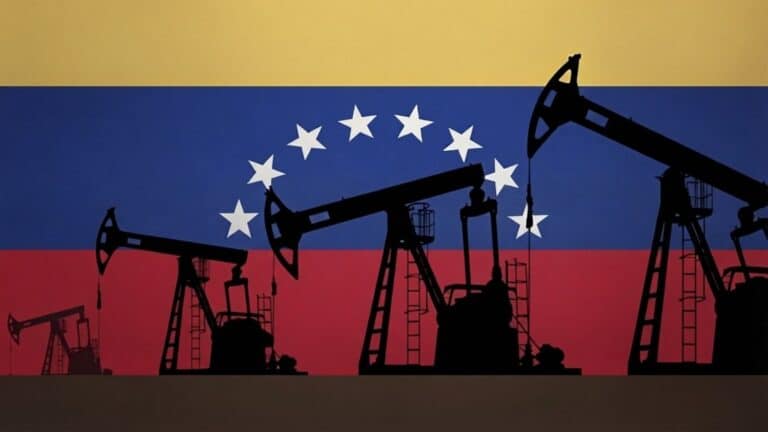
The White House announced last week an oil deal for more than 65 billion barrels of oil reserves in Venezuela and a 35% equity stake in North American Blue Energy Partners (NABEP).
Hear in-depth conversations with the world’s top energy and climate leaders from government, business, academia, and civil society.
It's been a tumultuous year for Venezuela, marked by political upheaval and deadly earthquakes. Then, in late August, the Trump administration announced a deal for over 65 billion...
Find out more about our upcoming and past events.
Join Women in Energy at Columbia University's Center on Global Energy Policy for a virtual information session on careers at the World Bank Group. The World Bank Group...

Past Event
June 20, 2013
5:30 am - 7:00 am
Please join the Center on Global Energy Policy for a presentation by Dr. Fatih Birol, Chief Economist at the International Energy Agency, of the World Energy Outlook (WEO) Special Report “Redrawing the Energy-Climate Map.” As part of the IEA’s WEO 2013 series, this special report focuses on the role of the energy sector in addressing climate change and the potential impacts of climate change on the energy sector. Dr. Birol will present the report’s key findings after which David Sandalow, Center Fellow and former Undersecretary of Energy (Acting) and Assistant Secretary for Policy and International Affairs at the US Department of Energy, and Fred Krupp, President of the Environmental Defense Fund, will offer reactions as to what the findings mean for the future of global energy-, climate-, and economic-policy. A question and answer session will follow the prepared remarks, moderated by Center Director Jason Bordoff. Registration is required. This event is open to the press.
For additional information please contact: Jesse McCormick ([email protected]) and Pawel Olejarnik ([email protected])
Press contact: Leslie Patterson, 646-200-5326, [email protected]
###
World Energy Outlook Special Report
Governments have decided collectively that the world needs to limit the average global temperature increase to no more than 2oC and international negotiations are engaged to that end. Yet any resulting agreement will not emerge before 2015 and new legal obligations will not begin before 2020. Meanwhile, despite many countries taking new actions, the world is drifting further and further from the track it needs to follow.
The energy sector is the single largest source of climate-changing greenhouse-gas emissions and limiting these is an essential focus of action. The World Energy Outlook has published detailed analysis of the energy contribution to climate change for many years. But, amid major international economic preoccupations, there are worrying signs that the issue of climate change has slipped down the policy agenda. This Special Report seeks to bring it right back on top by showing that the dilemma can be tackled at no net economic cost.
The report:
The special report will be published on June 10, 2013. For more information, please visit: http://www.worldenergyoutlook.org/energyclimatemap
Join Women in Energy at Columbia University's Center on Global Energy Policy for a virtual information session on careers at the World Bank Group. The World Bank Group...
This event is at capacity, registration is closed. Building Abundant Energy in the Global South – Energy Opportunity Forum 2026 The Center on Global Energy Policy will host...
PCCMs facilitate the generation, trading, and retirement of carbon credits from projects that remove, reduce, or avoid greenhouse gas emissions. By creating a revenue stream from verified climate...

This event is at capacity, registration is closed. For today’s leaders and policymakers, the global energy transition and climate change are increasingly informing decision making at the highest...
The White House announced last week an oil deal for more than 65 billion barrels of oil reserves in Venezuela and a 35% equity stake in North American Blue Energy Partners (NABEP).

The Hormuz crisis is the latest in a series of disruptions that have exposed the continent’s energy vulnerabilities. The time to build resilience is between crises, not during them.