This website uses cookies as well as similar tools and technologies to understand visitors’ experiences. By continuing to use this website, you consent to Columbia University’s usage of cookies and similar technologies, in accordance with the Columbia University Website Cookie Notice.
Energy Explained
Get the latest as our experts share their insights on global energy policy.
Chinese Customs Data Reveal Deeper US Dependence on Chinese Rare Earths
One of the central objectives of the second Trump administration has been to pursue a maximalist trade policy toward China.
Podcasts
Hear in-depth conversations with the world’s top energy and climate leaders from government, business, academia, and civil society.
Jessica Uhl on the Fractured Energy Transition: Why Speed Matters Now
The clean energy transition had real momentum at the end of 2024. It was buoyed by federal support, billions of dollars of investment in new technologies, and broad...

Podcast
Gary Sick & Richard Nephew – Trump’s Ultimatum & the Future of the Iran Deal
January 14, 2018
President Trump has taken new steps to fulfill his campaign promise to either end the Iran nuclear agreement or get a better deal. After much speculation over whether he would extend the deal at all, the President issued an ultimatum to Congress and European allies indicating that if they don’t overhaul the deal in the next 120 days, the United States will have no choice but to pull out of it.
To discuss what these developments, alongside growing protests in Iran over the state of the nation’s economic affairs, mean for energy markets and international affairs, host Jason Bordoff sits down with two colleagues at Columbia University’s School of International and Public Affairs (SIPA), Gary Sick and Richard Nephew.
Gary is a senior research scholar at Columbia’s Middle East Institute and an adjunct professor at SIPA. He served on the National Security Council under Presidents Ford, Carter, and Reagan and he was the principal White House aide for Iran during the Iranian Revolution and the hostage crisis. Richard, a senior research scholar at CGEP and adjunct professor at SIPA, served as Principal Deputy Coordinator for Sanctions Policy at the Department of State. He was the lead sanctions expert for the U.S. team negotiating with Iran and also Director for Iran on the National Security Staff where he was responsible for managing a period of intense expansion of U.S. sanctions on Iran.
Jason, Gary, and Richard discuss issues including: What happens next in EU countries and U.S. Congress in response to President Trump’s ultimatum; Growing protests in Iran and the future of the Iranian regime; Whether or not there are links between economic sanctions against Iran and growing protests in the country; Implications for energy markets should the Iran Deal fall through.
More Episodes
Jessica Uhl on the Fractured Energy Transition: Why Speed Matters Now
The clean energy transition had real momentum at the end of 2024. It was buoyed by federal support, billions of dollars of investment in new technologies, and broad...
Ashley Finan and Amy Roma on Speed, Safety, and Reforming Nuclear Energy
For years, the energy transition was discussed as a shift that would happen in steady, predictable increments. But a massive surge in electricity demand in recent years—now colliding...
Columbia Energy Exchange Podcast
• June 2, 2026

Katie Auth on How the ‘Modern Energy Minimum’ Can Drive Economic Growth
Despite all the advancements we have achieved globally in recent decades, as many as 750 million people still lack access to electricity. Tackling energy poverty requires far more...

Speed to Power: Christian Bruch on Siemens Energy’s Turnaround
For years, the energy transition was discussed as a shift that would happen in steady, predictable increments. But the last 24 months have shattered that illusion. Energy providers...

Relevant
Publications
Silicon Valley’s Bad Bet on the Gulf
Why the AI build-out was doomed from the start.
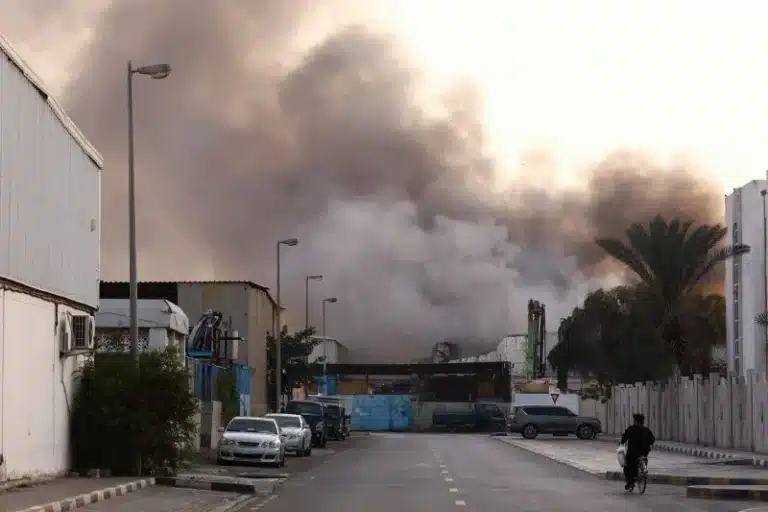
Chinese Customs Data Reveal Deeper US Dependence on Chinese Rare Earths
One of the central objectives of the second Trump administration has been to pursue a maximalist trade policy toward China.
Pourquoi les Prix du Gaz Européens ne Flambent-Ils pas?
CHRONIQUE. Nouvelles usines de liquéfaction et augmentation des exportations expliquent, entre autres, pourquoi les prix du gaz ne connaissent pas le pic observé en 2022, lors de l’invasion de l’Ukraine. Mais cette stabilité des prix ne traversera pas l’été, écrit Anne-Sophie Corbeau, spécialiste de l’énergie au Center on Global Energy Policy de l’Université Columbia
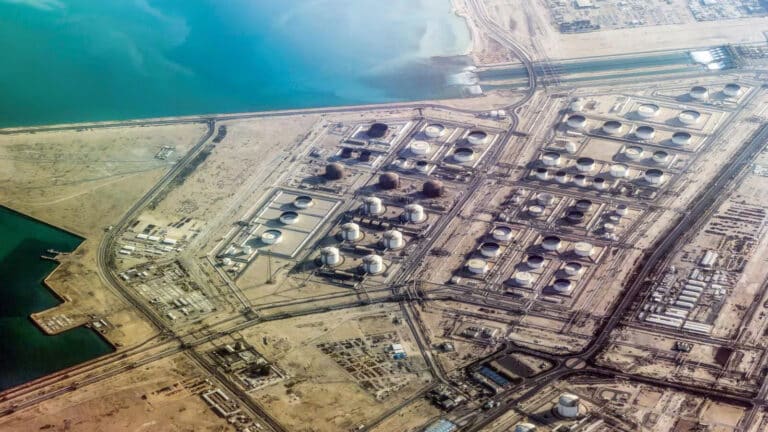
How the Next Round of US Tariffs Could Shape Global Energy and Industrial Value Chains
In March 2026, the Office of the US Trade Representative (USTR) announced it was investigating "structural excess capacity and production in manufacturing sectors" in 16 economies.