This website uses cookies as well as similar tools and technologies to understand visitors’ experiences. By continuing to use this website, you consent to Columbia University’s usage of cookies and similar technologies, in accordance with the Columbia University Website Cookie Notice.
Energy Explained
Get the latest as our experts share their insights on global energy policy.
New US Tariffs on Solar Products Establish Price Floors, but Onshoring Will Require Capacity Build-out
President Trump issued a proclamation on August 6 imposing tariffs on polysilicon and solar products.

Podcasts
Hear in-depth conversations with the world’s top energy and climate leaders from government, business, academia, and civil society.
Editor’s Pick: Rajiv Shah on Delivering Universal Abundant Energy Access
Energy abundance means different things in today’s global context than it did even a decade ago. It is about expanding electricity access while meeting rising energy demand. It...
Columbia Energy Exchange Podcast
• August 25, 2026

Events
Find out more about our upcoming and past events.
September 10, 2026
• 10:00 am - 11:00 am
edt
Carbon Markets Webinar: The Path Forward for Carbon Credit Markets
PCCMs facilitate the generation, trading, and retirement of carbon credits from projects that remove, reduce, or avoid greenhouse gas emissions. By creating a revenue stream from verified climate...
Event

India has laid out an ambitious agenda to expand energy access to all its people, reduce air pollution, increase energy security, and reduce carbon emissions intensity. It has made tremendous progress providing access to electricity and clean cooking to its people. It rapidly increased the deployment of renewables even as coal still supplies two thirds of its electricity mix. The country’s oil consumption is expected to grow faster than any other major economy, as are its CO2 emissions. In short, with a population of 1.4 billion people, and rapidly rising energy demand, India will be a key country, perhaps the key country, for energy markets and climate change in the decades to come.
In this edition of Columbia Energy Exchange, host Jason Bordoff is joined by Dr. Ajay Mathur, Director General of The Energy & Resources Institute in New Delhi, to discuss the energy outlook in India. Ajay was in New York City in February to attend a workshop hosted by the Center on Global Energy Policy on engaging state-owned enterprises in climate action, based on a recent report from the Center.
Ajay is a member of the Prime Minister’s Council on Climate Change. He served as Director General of the Bureau of Energy Efficiency in the Indian government from 2006 until 2016, and previously headed the Climate Change Team at the World Bank, as well as the interim Secretariat of the Green Climate Fund.
More Episodes
Editor’s Pick: Rajiv Shah on Delivering Universal Abundant Energy Access
Energy abundance means different things in today’s global context than it did even a decade ago. It is about expanding electricity access while meeting rising energy demand. It...
Columbia Energy Exchange Podcast
• August 25, 2026
Matthew Yglesias on Abundance and the Politics of Energy
Abundance and affordability have become buzzwords among policymakers, who often have sharply different interpretations of how to attain them. To some, an energy abundance agenda means fewer regulatory...

Luisa Palacios on Rebuilding Venezuela’s Oil Industry After the Quakes
It started last year as a pressure campaign at sea, with the United States seizing tankers as part of what President Trump called a “total and complete blockade”...

Javier Blas on Lessons from Closing Hormuz (So Far)
Over the past five months, the Strait of Hormuz has been closed for extended stretches of time, disrupting roughly 10 to 15 million barrels of oil supply each...

Relevant
Publications
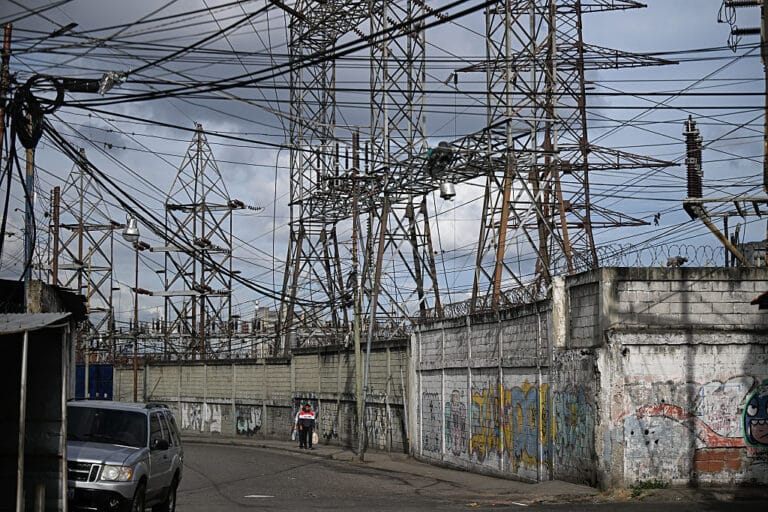
Venezuela’s Overwhelming Electricity Crisis
Simultaneous pressures are colliding at the worst possible time, making power generation a central test of the country’s capacity to recover.
New US Tariffs on Solar Products Establish Price Floors, but Onshoring Will Require Capacity Build-out
President Trump issued a proclamation on August 6 imposing tariffs on polysilicon and solar products.
Asia Pacific: the new epicentre of global energy growth
The centre of gravity of the global energy system has definitively shifted eastward, driven by rapid industrialisation, expanding urban populations, and rising

From New York to Texas, states should respect local control on data centers
Data centers face growing local opposition as states impose moratoriums on hyperscale projects and grid connections. Communities can negotiate deals for tax revenue and jobs.