La caída a largo plazo de suministro de Qatar no provocará escasez, pero se notará en la factura del gas
Apenas el 3% del gas licuado que importa España viene del emirato, con Italia y Bélgica como los más afectados en Europa
Current Access Level “I” – ID Only: CUID holders, alumni, and approved guests only
Get the latest as our experts share their insights on global energy policy.
On March 20, Governor Kathy Hochul proposed significant changes to New York’s Climate Leadership and Community Protection Act (CLCPA), the landmark climate law passed in 2019.

Hear in-depth conversations with the world’s top energy and climate leaders from government, business, academia, and civil society.
Today marks the last day of CERAWeek, the annual energy industry conference sometimes described as the Davos of energy. As oil and gas CEOs and government officials gathered...
Find out more about our upcoming and past events.
This roundtable is open only to currently enrolled Columbia University students. To register, you must sign in with your UNI. The Center on Global Energy Policy at Columbia...

Explore our expert insights and analysis on leading energy and climate news stories.
The Resilient Energy Economies initiative (REE) is pleased to announce that it is funding six new research projects to help US fossil fuel-dependent communities diversify and strengthen their...

The Institute of Global Politics (IGP) and Center on Global Energy Policy (CGEP) at Columbia SIPA today announced a new task force focused on analyzing how tools of...
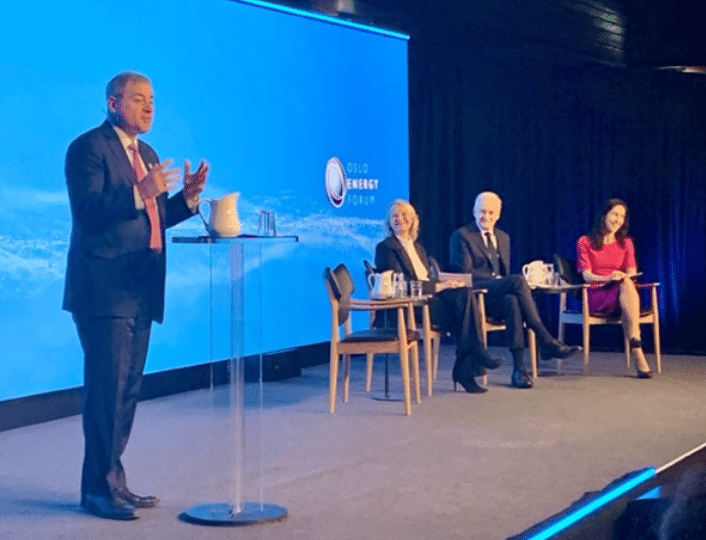
I’m en route home after a week in Europe—first at the Oslo Energy Forum and then at the Munich Security Conference. Munich generated considerable news and drama, but...
The Center on Global Energy Policy (CGEP) at Columbia University SIPA today announced the fourth cohort of the David Leuschen Global Energy Fellows. The cohort, which consists of...

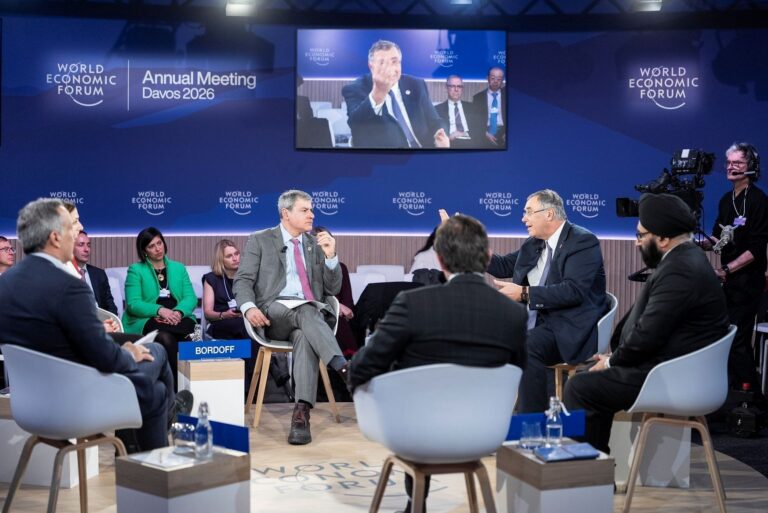
As the train pulls away from Davos Dorf station through the snow-capped Swiss mountains, I find myself reflecting on a rather extraordinary week at the World Economic Forum’s Annual Meeting in Davos. While many questioned Davos’ continuing relevance last year, it is difficult to argue that this year’s gathering was not among the most consequential in recent memory, shaped in large part by President Trump’s dominant presence throughout the week’s discussions.
Apenas el 3% del gas licuado que importa España viene del emirato, con Italia y Bélgica como los más afectados en Europa
El alivio de las sanciones sobre el petróleo de Rusia decretado por el Gobierno de EEUU concederá miles de millones de dólares extra al presupuesto del Kremlin y mejorará su posición negociadora ante Occidente
Powered by SnapStream Cloud Sharing
Explore how the Iran war and rising oil prices are impacting Latin American economies, from Argentina to the Caribbean. Read more at straitstimes.com.
Secretary Scott Bessent’s recent moves help explain something broader about the way this administration operates.
The U.S. is insulated from global shocks on the heating and power plant fuel as the Iran war pushes gasoline prices up.
글로벌 전문가들 본지 인터뷰“석유와 달리 즉각적인 대체 수단 없어”“전쟁 장기화 시 에너지 수요 파괴 불가피”▲샘 레이놀즈(왼쪽부터) 미국 에너지경
The bombardment of Iran has caused an enormous commodity-supply shock, prompting an accelerated global rush to greener energy sources.
As the U.S.-Iran war nears the one-month mark, the fragile global oil market has emerged as a key weapon in Iran's arsenal — and some shipping and insurance experts don't expect the situation to return to normal until the conflict winds down.
The factories, which buy cheap crude and turn it into fuel, are struggling as higher oil prices threaten their razor-sharp margins