U.S.-Iran MOU tension points are in Lebanon, says Columbia’s Karen Young
Karen Young, Columbia University, joins 'Power Lunch' to discuss the latest agreement between the U.S. and Iran, what could terminate the MOU and much more.
This website uses cookies as well as similar tools and technologies to understand visitors’ experiences. By continuing to use this website, you consent to Columbia University’s usage of cookies and similar technologies, in accordance with the Columbia University Website Cookie Notice.
Our work is committed to independent and nonpartisan research that meets the high standards of academic integrity and quality at Columbia University.
Our initiatives and programs are designed to address critical needs in key focus areas around energy and climate policy.
Explore our expert insights and analysis in leading energy and climate news stories.
Karen Young, Columbia University, joins 'Power Lunch' to discuss the latest agreement between the U.S. and Iran, what could terminate the MOU and much more.
Get the latest as our experts share their insights on global energy policy.
Critical minerals were once again near the top of the agenda for G7 leaders as they met in Évian, France, this week, a year after the G7 launched the Critical Minerals Action Plan.

Hear in-depth conversations with the world’s top energy and climate leaders from government, business, academia, and civil society.
Yesterday, the US and Iran signed a memorandum of understanding starting the clock on a 60-day truce. The agreement intends to halt attacks, begin lifting the US naval...
Find out more about our upcoming and past events.
This event will take place in-person in Washington DC, at the Rayburn House Office Building, Room 2168 (Gold Room). Advance registration is required. Announcing New Columbia University Publications...
We are the premier hub and policy institution for global energy thought leadership. Energy impacts every element of our lives, and our trusted fact-based research informs the decisions that affect all of us.
Sarah Braverman was a student research officer for the Carbon Management Research Initiative at the Center on Global Energy Policy at Columbia University’s School of International and Public Affairs (SIPA) while completing a master of public administration with a concentration in environmental science and policy from SIPA. For her capstone with the Natural Resources Defense Council, she managed a team of graduate consultants in their endeavor to develop policy recommendations for managing hydrofluorocarbon emissions. Braverman has worked for several years in the environmental nonprofit sector, both domestically and internationally, in a variety of capacities, including project management and external partnership development. She is currently a client project manager at Carbon Direct.
As global warming mitigation and carbon dioxide (CO2) emissions reduction become increasingly urgent to counter climate change, many nations have announced net-zero emission targets as a commitment to rapidly reduce greenhouse gas emissions.
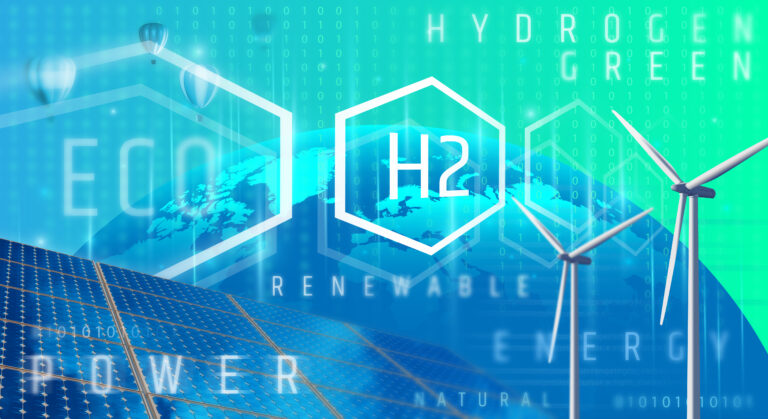
Hydrogen can play an important role in decarbonizing global energy systems.

Ensuring an effective transition to a net-zero world will require developing and utilizing zero-carbon fuels.
To reach net-zero emissions by 2050 to limit global temperature rise to 1.5 degrees Celsius (°C), low-carbon hydrogen can play an important role both as a carbon-free fuel and as a feedstock for fuels and products.

Get the latest news and research on energy & climate policy.
"(required)" indicates required fields