U.S.-Iran MOU tension points are in Lebanon, says Columbia’s Karen Young
Karen Young, Columbia University, joins 'Power Lunch' to discuss the latest agreement between the U.S. and Iran, what could terminate the MOU and much more.
Get the latest as our experts share their insights on global energy policy.
Critical minerals were once again near the top of the agenda for G7 leaders as they met in Évian, France, this week, a year after the G7 launched the Critical Minerals Action Plan.

Hear in-depth conversations with the world’s top energy and climate leaders from government, business, academia, and civil society.
Yesterday, the US and Iran signed a memorandum of understanding starting the clock on a 60-day truce. The agreement intends to halt attacks, begin lifting the US naval...
Find out more about our upcoming and past events.
This event will take place in-person in Washington DC, at the Rayburn House Office Building, Room 2168 (Gold Room). Advance registration is required. Announcing New Columbia University Publications...
President, NARUC
Discussions about U.S. energy policy typically focus on Washington, where the White House, Congress and agencies like the Federal Energy Regulatory Commission dominate the headlines. This makes it easy to overlook the roles played by state regulators, whose vital decisions affect the flow of energy locally and how much consumers pay for electricity and natural gas.
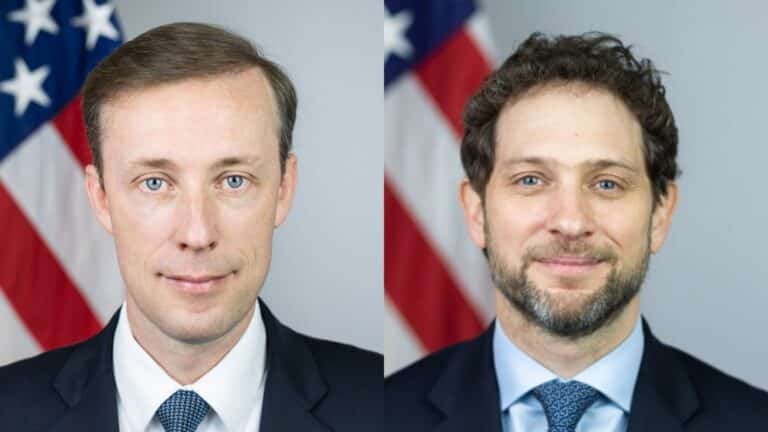
With that in mind, host Bill Loveless sat down with John “Jack” Betkoski III, the new president of the National Association of Regulatory Utility Commissioners (NARUC), to talk about challenges facing state regulators at a time when innovative technology, a changing climate and shifting public attitudes are disrupting traditional energy markets.
As Jack notes in the podcast, “We’re the ones in the trenches. We’re the ones who deal with utilities on a regular basis.”
Jack, the vice chairman of the Connecticut Public Utilities Regulatory Authority, and Bill met outside NARUC’s 2018 Winter Policy Summit in Washington, D.C., where more than 1,000 state regulators and others gathered.
Among the topics that Bill and Jack discussed are: The energy-water nexus—the primary theme of Jack’s NARUC presidency; Recent actions by FERC on electricity resilience and reliability; Public opposition to new gas pipeline construction; Concerns over the volatility of recent storms; The outlook for renewable energy, nuclear energy.
Yesterday, the US and Iran signed a memorandum of understanding starting the clock on a 60-day truce. The agreement intends to halt attacks, begin lifting the US naval...
The 109-day-old Iran crisis is heading toward an off-ramp in the form of a not-yet-public Memorandum of Understanding to reopen the Strait of Hormuz. While energy markets are...

The clean energy transition had real momentum at the end of 2024. It was buoyed by federal support, billions of dollars of investment in new technologies, and broad...

For years, the energy transition was discussed as a shift that would happen in steady, predictable increments. But a massive surge in electricity demand in recent years—now colliding...

The UNFCCC process is marred by gridlock in the COP multilateral framework, threatening joint efforts by countries to mitigate the climate crisis.
On March 20, Governor Kathy Hochul proposed significant changes to New York’s Climate Leadership and Community Protection Act (CLCPA), the landmark climate law passed in 2019.

In January 2026, the UK government publicly released an intelligence report analyzing the security implications of global environmental destruction.