Bipartisan Senate group urges Trump to abandon plan to buy Russian diesel amid Ukraine war
A bipartisan group of six senators is urging President Donald Trump’s administration to abandon a plan to purchase diesel from Russia.
Get the latest as our experts share their insights on global energy policy.
Mandatory application review by the Advisory Committee on Reactor Safeguards (ACRS) reflects an earlier era, when the nuclear regulator lacked today’s permanent technical staff and nuclear promotion was...

Hear in-depth conversations with the world’s top energy and climate leaders from government, business, academia, and civil society.
Carbon credit markets have become one of the most hotly debated tools in the fight against climate change. Supporters call them essential to closing the gap between corporate...

Find out more about our upcoming and past events.
The Center on Global Energy Policy at Columbia University SIPA’s Women in Energy initiative invites Columbia University students to a roundtable discussion with Pam Brown, Managing Director at...

The U.S. shale revolution has been among the most consequential developments in the global energy sector over the last decade. The U.S. is a large net exporter of gas, and is on the cusp of becoming a net exporter of oil, with significant economic, geopolitical and environmental consequences. The outlook for U.S. oil and gas production is increasingly uncertain, however, as lower oil prices, investor demand for capital discipline, and questions about the pace of the energy transition increasingly impact the sector.
In this edition of Columbia Energy Exchange, host Jason Bordoff is joined by Bobby Tudor, Co-Head of the Advisory business of Perella Weinberg Partners and Chairman of Tudor, Pickering, Holt & Co, a leading energy investment and merchant bank. Prior to joining TPH, Bobby was a partner with Goldman Sachs & Co., and a leader of its worldwide energy practice, and over his 30-year career in investment banking, has worked on many of the defining transactions of the period. In his volunteer work, Bobby is a patron of the arts and a passionate supporter of higher education, having served until recently as Chairman of the Board of Trustees at Rice University.
Jason and Bobby discuss the recent decline in the Permian and what’s next for the U.S. shale revolution, peak oil demand, the energy transition and more from an investor’s perspective.
Carbon credit markets have become one of the most hotly debated tools in the fight against climate change. Supporters call them essential to closing the gap between corporate...
Global gas markets, especially in Europe, are approaching winter under serious pressure. With storage inventories lagging behind historical averages and shipping disruptions from the Middle East threatening key...

Seven months into the largest oil supply disruption in history, there's still no resolution in sight. This week, on the sidelines of the UN General Assembly, US and Iranian officials held their first indirect talks since the Memorandum of Understanding collapsed in July—but neither side appears ready for concessions.
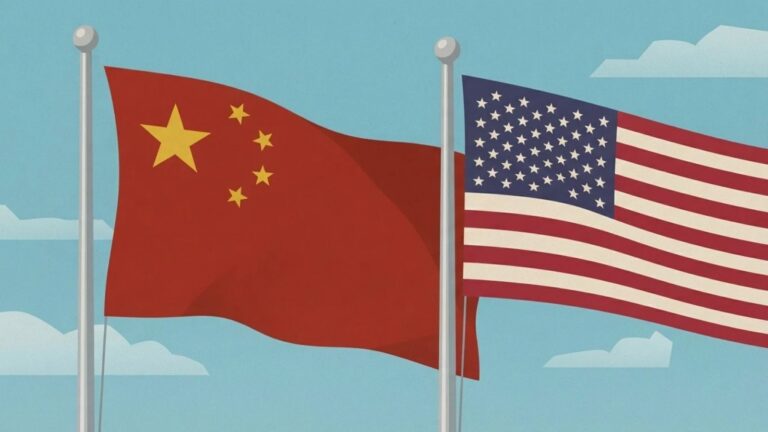
This week, Chinese President Xi Jinping travels to Washington for a state visit with President Trump, their second face-to-face meeting this year. Energy is likely to be high...

Mandatory application review by the Advisory Committee on Reactor Safeguards (ACRS) reflects an earlier era, when the nuclear regulator lacked today’s permanent technical staff and nuclear promotion was...
Last week's summit between US President Trump and Chinese President Xi was the second meeting between the two leaders since the US and Israel attacked Iran.
In this edition of Global Institute Dialogues Jason Bordoff discusses how the Iran crisis, China’s electrification strategy, and the US shale revolution have changed energy geopolitics.

The Middle East crisis has increased demand for China's clean technologies.